
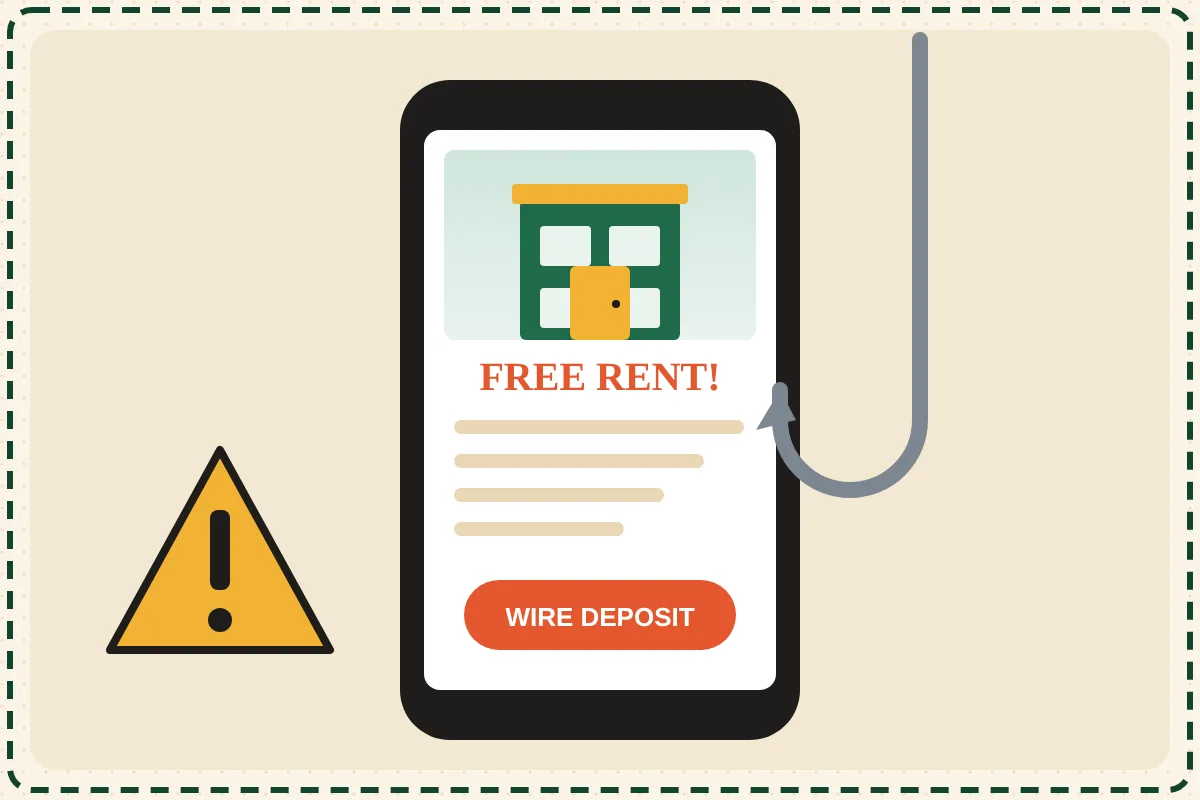
"Free rent" and "rent for work" are favorite hooks for scammers because they target people under financial pressure. The Federal Trade Commission's consumer guidance boils the defense down to a few rules: see the place, verify who owns it, sign a lease before paying, and never pay by wire transfer, gift card or cryptocurrency.
The three guides
- Rental scams: the full checklist of red flags and how to verify a landlord.
- Fake free-rent listings: the specific cons built around "free apartment" and "rent for chores" posts.
- Deposit and application fee scams: how hold-fee and deposit frauds work, and how to get money back if you paid.
The five-second test
Ask three questions before paying anyone: Have I seen the inside of the unit or met the owner or manager in person? Have I confirmed who owns it through county records or the management company? Am I paying through a method that can be disputed, such as a card or the property's official portal? If any answer is no, stop. Scammers rely on urgency; a legitimate landlord or employer will still be there tomorrow.
Who gets targeted
Scams cluster around people in a hurry: students arriving from out of town, people relocating for work, military families, and anyone who has just lost housing. Posts promising free rent for chores, caregiving or house sitting reach exactly the people who most need a break, which is why they are so common.
All guides in this section
 Scams to avoidRental scamsThe red flags, the verification steps and where to report.Scams to avoidFake free-rent listingsCons built around "free apartment" and "rent for chores" posts.
 Scams to avoidDeposit and application fee scamsHow hold-fee and deposit frauds work, and how to recover money.
General information, not legal, tax or financial advice. Program rules, income limits and job terms change and vary by place; confirm details with the agency, employer or a qualified professional.