

Renters asked to pay to hold, reserve or apply for a unit
Deposits that can equal a full month of rent or more
Some legitimate properties charge holding deposits, so verification matters
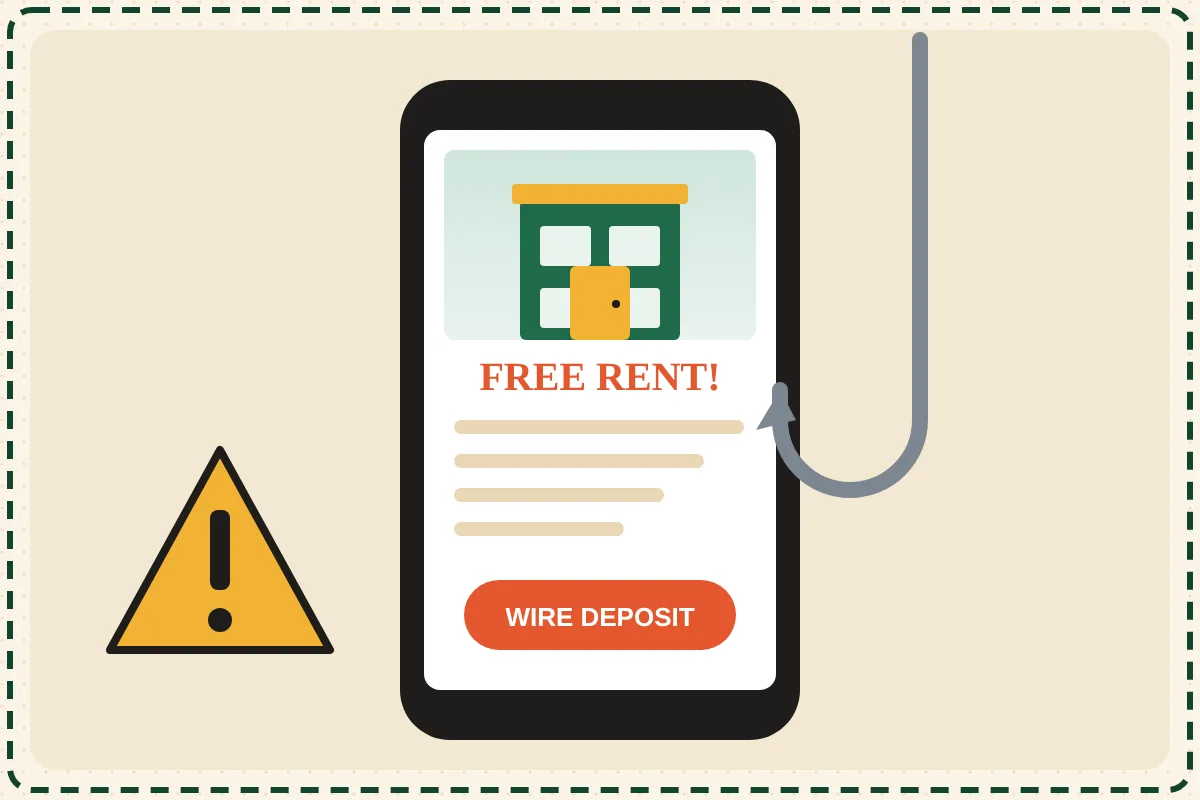
Deposit scams are the money end of most rental fraud. Once you are excited about a place, the scammer asks for a "holding deposit," "reservation fee" or "first month plus deposit," and disappears. Because some real landlords do charge holding deposits, the key is to verify who you are paying and get terms in writing.
How the scam usually runs
- A listing (often copied from a real one) shows a great price.
- The "landlord" is quick to approve you, with little or no screening.
- You are asked to pay before seeing the unit or before signing a lease, usually by wire, gift card, crypto or a payment app.
- Communication stops, or a new fee appears.
Safe rules for deposits and fees
- Pay only after seeing the unit and confirming the owner or manager.
- Get a written receipt or holding-deposit agreement that says whether the money is refundable and under what conditions.
- Pay through the property's official portal or by card or check payable to the company.
- Expect reasonable application fees; many states cap or regulate them, and some require refunds if no screening is done.
- Never pay a "locator fee" in advance for a property-paid commission market; licensed locators in those markets are paid by properties.
If you paid
- Call your bank, card issuer or payment app immediately and ask for a reversal or chargeback.
- Report the scam to the listing site, the FTC (ReportFraud.ftc.gov) and the FBI (ic3.gov).
- Keep screenshots of the ad, messages and payment records.
- Watch for follow-up "recovery" scams that promise to get your money back for a fee.
Frequently asked questions
Is a holding deposit always a scam?
No. Some properties take a holding deposit after approval to take a unit off the market. Verify the property, get written terms, and pay through official channels.
How do I get a deposit back from a scammer?
Act fast through your payment provider. Card disputes offer the best chance; wires and gift cards are hard to recover.
Sources
Checked 2026-11-28. Programs change; follow the links for current rules.
Keep reading
- Rental scams The red flags, the verification steps and where to report.
- Fake free-rent listings Cons built around "free apartment" and "rent for chores" posts.
- Apartment move-in specials How "first month free" and other concessions really work.
General information, not legal, tax or financial advice. Program rules, income limits and job terms change and vary by place; confirm details with the agency, employer or a qualified professional.